
Porches & conservatories · Staffordshire & Cheshire
Porch & ConservatoryInfills That Make theRoom Usable Again
Replace tired glazing and failed panels with warmer, quieter infills so a conservatory stops being a summer-only greenhouse and a porch stops being a cold box between two doors.
Rated 5.0 from 99 Google reviews10-year insurance backed guarantee
Get a Free Quote
Assure certified
Installations independently checked against Building Regulations.
10-year IBG
Every installation covered by an insurance backed guarantee.
5.0 from 99 reviews
Verified Google reviews from customers across Staffordshire.
Family-run since 2019
Company No. 12220717, based in Stoke-on-Trent.
Free written quotation
Surveyed, priced in writing, with no obligation to proceed.


The service
Keep the structure, change what fills it
An infill is a replacement panel or glazed unit fitted into an existing frame, so the porch or conservatory keeps its structure while the parts that are failing are changed. That can mean swapping a cracked or misted sealed unit, replacing a thin, brittle low-level panel with an insulated one, changing clear glazing to solar-control glass, or filling a redundant opening with a solid insulated panel.
It suits anyone with a conservatory that is unbearably hot in July and unusable in January, a porch that lets the cold straight through to the hallway, or a glazed structure from the 1990s where the units have misted and the panels have gone chalky and flexible. The frame is often perfectly sound; the fill is what has aged.
The trigger points are easy to recognise: condensation trapped between panes, a low-level panel that flexes when pushed, draughts around the panel edges, glare and heat that make the room unusable at midday, and a conservatory door that everyone keeps closed because the room behind it is cold.
Doing it properly matters because these structures are lightweight and every joint is a potential water path. Panels must be the correct thickness for the rebate, glazing must be safety glass in critical locations, and every gasket and seal must be reinstated so the frame drains outwards. An infill fitted with packers and mastic instead of the right unit will leak, rattle and fail.
Who it is for
Owners of conservatories and porches with failed glazing or tired panels who want the space usable without rebuilding the structure.
When it is needed
Misted or cracked units, flexing or discoloured panels, draughts at the panel edges, unbearable summer heat, or a porch that chills the hallway.
What is included
Survey of the frame and rebates, specification of the correct panel or glass, removal of the failed infill, fitting on new seals, and testing for drainage and operation.
What happens if it waits
A room you cannot use is the most expensive room in the house
Conservatories are frequently the largest single-purpose space a household owns and the one they use least. Too hot to sit in from May to September, too cold from October to March, and in between a storage room for the things that have nowhere else to go. You are paying rates, insurance and maintenance on floor area that is effectively out of commission.
Failed infills also let the problems travel inwards. Draughts around loose panels and misted units pull heat from the adjoining room every time the connecting door opens, and cold glazing produces streaming condensation that soaks the frames, the cill boards and eventually the floor edge. A porch with a failing panel does the same thing to a hallway.
The mistake we see most is patching with the wrong material: a sheet of thin plastic cut to fit a rebate designed for a 24 or 28mm unit, packed out with foam and sealed with mastic. It rattles in the wind, it lets water into the drainage channel from the wrong side, and it usually needs doing again within two years: by which time the frame has been damaged by the fixings used to hold it.
Floor area you have written off
An unusable conservatory is space you insure, heat and maintain but never actually occupy.
Heat pulled from the adjoining room
Draughty panels and failed units drain warmth from the house every time the connecting door is opened.
Condensation damaging frames and floors
Cold glazing streams with condensation that soaks cill boards, frame joints and the floor edge below.
Water finding a way in
The wrong infill defeats the frame's drainage design, so rain enters at the panel edge and works into the structure.
Our process
How an infill job is carried out
Infills are quick jobs when the survey is accurate: the rebate depth, the drainage design and the glass specification all have to be right before anything is ordered.
- STEP 1
Inspection
We check the frame, rebates, gaskets and drainage paths, and confirm which panels or units have failed and why.
- STEP 2
Specification & written price
Insulated panel, standard sealed unit, solar-control or obscure glass: specified for the elevation and priced in writing.
- STEP 3
Manufacture to size
Panels and units are made to your exact rebate dimensions and thickness so they seat correctly rather than being packed to fit.
- STEP 4
Fitting
The failed infill is removed, the rebate and drainage cleared, new gaskets and setting blocks fitted, then the new infill bedded and beaded.
- STEP 5
Testing & sign-off
Drainage and seals are checked, openers are tested for smooth operation and compression, and the area is cleared and left clean.
What you get
What changing the infill actually delivers
A room in use for more of the year
Better-performing units and insulated panels take the extremes off both ends, so the space is comfortable well beyond high summer.
Far cheaper than rebuilding
You keep the existing structure, base and frame and change only the parts that have failed: a fraction of the cost of a new conservatory.
Glare and overheating controlled
Solar-control glass on the sunny elevation cuts heat gain and glare without turning the room dark.
Draughts and rattles gone
Correctly sized infills seated on new gaskets sit tight in the rebate, so nothing moves in the wind and nothing whistles.
Condensation reduced
Warmer internal surfaces mean far less streaming on the glazing and less moisture soaking into frames and floor edges.
Quick and low-disruption
Most infill work is completed within a day, with no building work, no disturbance to the structure and nothing to redecorate afterwards.
In detail
Panels, glass types and the situations they solve
The right infill depends on what the panel has to do: insulate, admit light, provide privacy, control heat or resist impact.
Insulated infill panels
Insulated panels are manufactured to the thickness of the rebate, commonly 24mm or 28mm, with a rigid insulating core between two faced skins. They give far better thermal performance than glazing, so they suit low-level positions, kitchen and utility door panels, and any position where you want warmth rather than a view.
They also solve the flexing problem. Where an original thin panel can be pushed in by hand, an insulated panel of the correct thickness is rigid and cannot be defeated the same way, which matters at low level on an accessible elevation.
Glazed infills and solar control
Where light matters, the infill is a sealed unit specified for the elevation. A-rated units with low-E coatings and warm-edge spacers are the baseline; solar-control coatings are added on south and west elevations to cut heat gain and glare while keeping the room bright.
Obscure glass gives privacy in porch side panels and where a conservatory faces a neighbour, and acoustic laminated glass is worth considering on a roadside elevation where the structure amplifies traffic noise.
Porches, doors and side panels
Porches are small and get used constantly, so the details count. Side panels and any glazing beside a door are critical locations and must be toughened or laminated, and low-level panels benefit from insulation rather than glass to keep the space and the hallway behind it warmer.
We check the drainage detail at the base of a porch frame at the same time, because a blocked or bridged channel is a common reason for damp appearing at the threshold, and it is easily missed when only the visible panel is replaced.
Conservatory frames and commercial glazed structures
Conservatory frames vary in rebate depth and drainage design, so each infill is measured against that specific system rather than to a standard. Where units have misted across the whole structure, replacing them together is more economical per unit than doing them one at a time as they fail.
The same approach applies to commercial glazed lobbies, entrance canopies and screens: keep the frame, replace the failed infills, and specify safety glass where impact and occupancy require it. Work is scheduled around trading hours where the entrance cannot be out of use.
Recent work
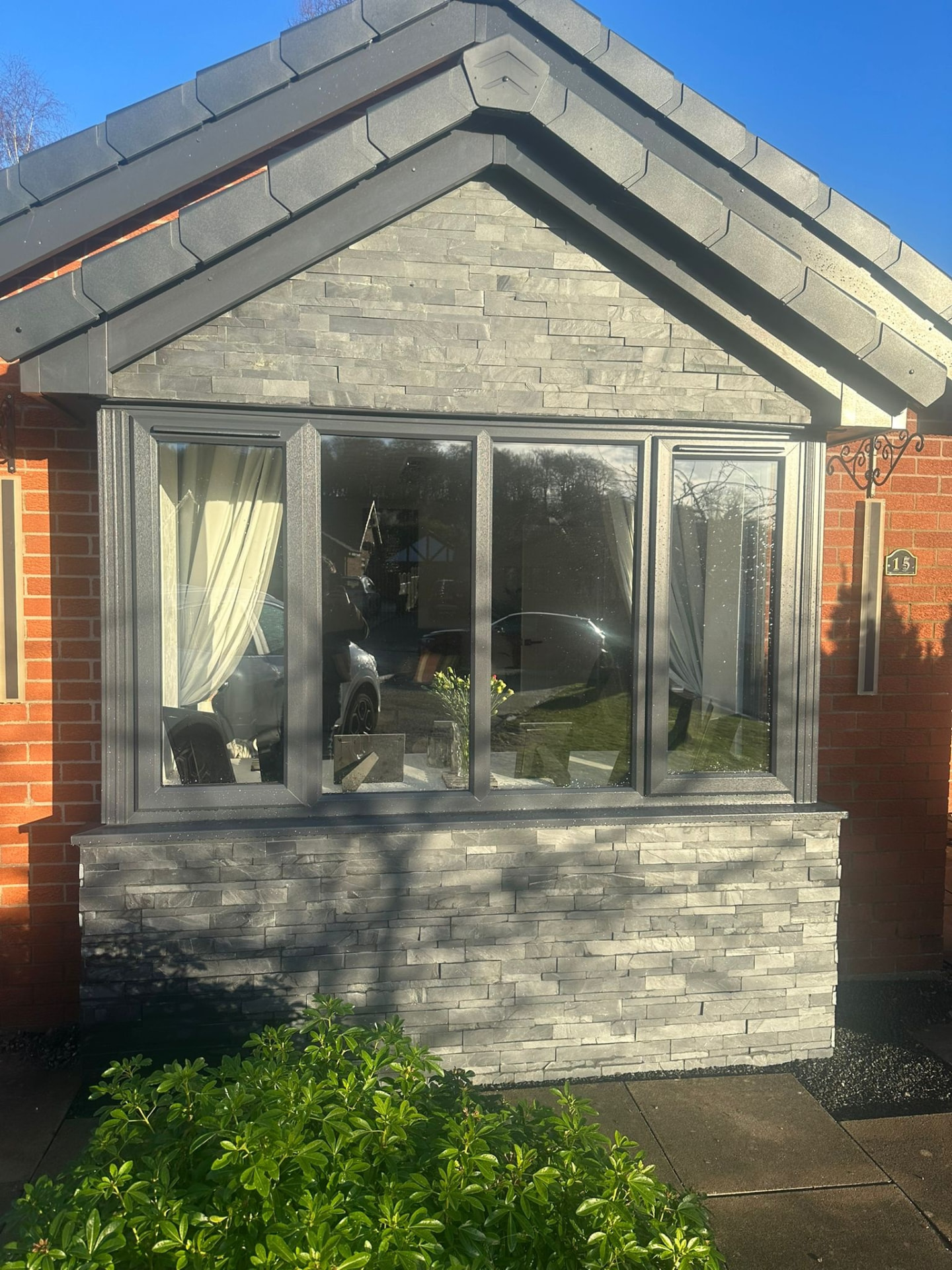
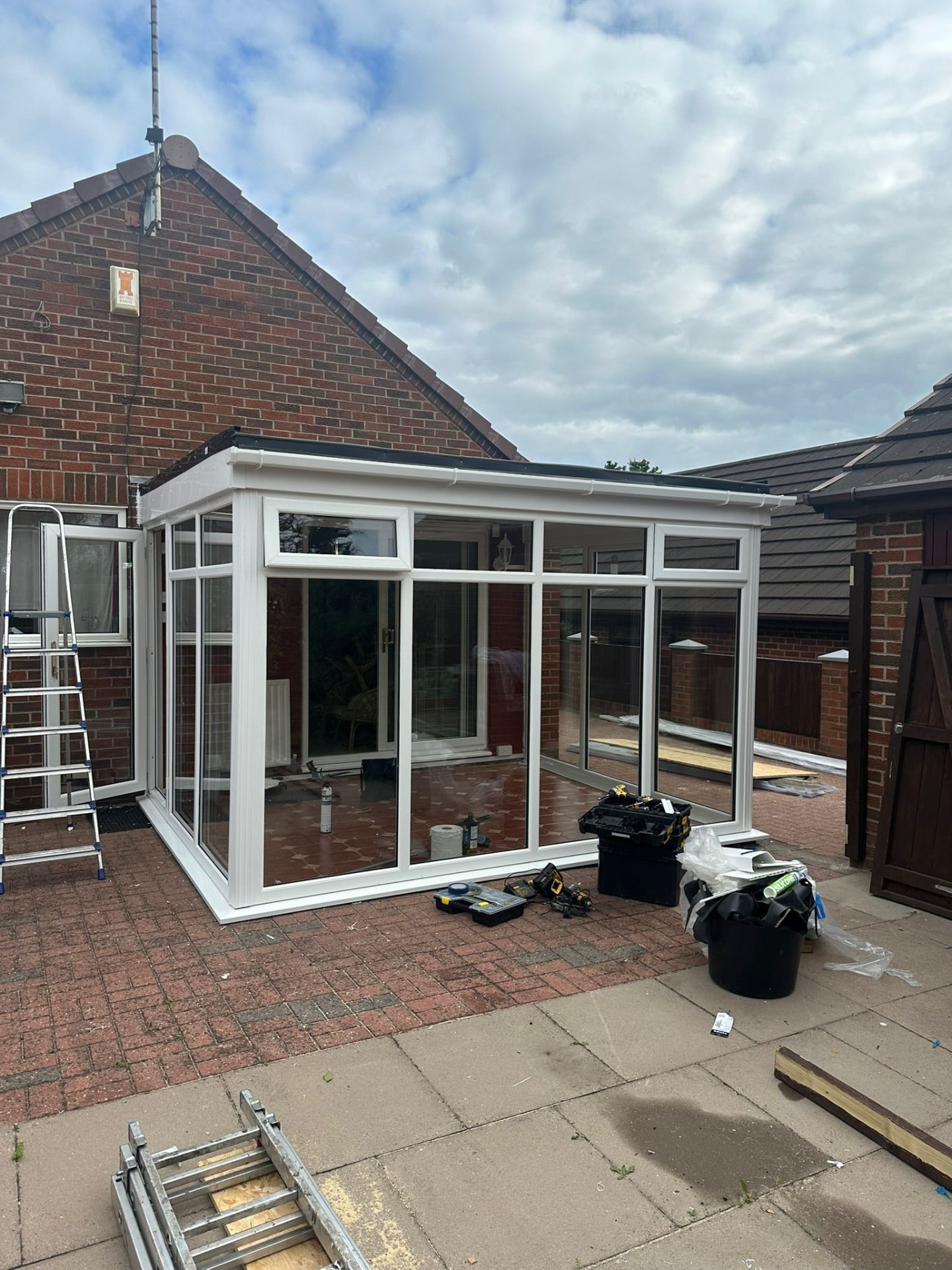
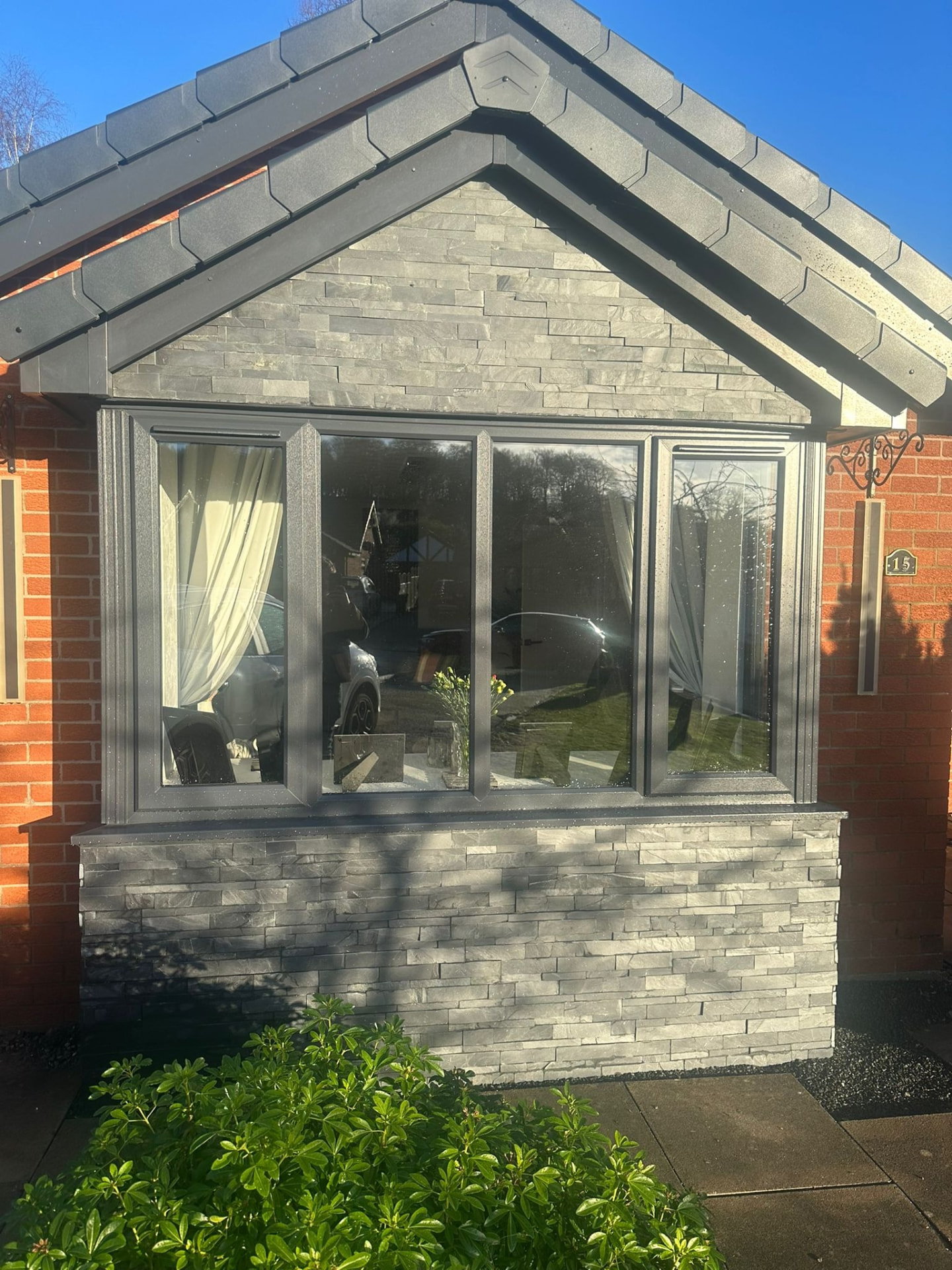
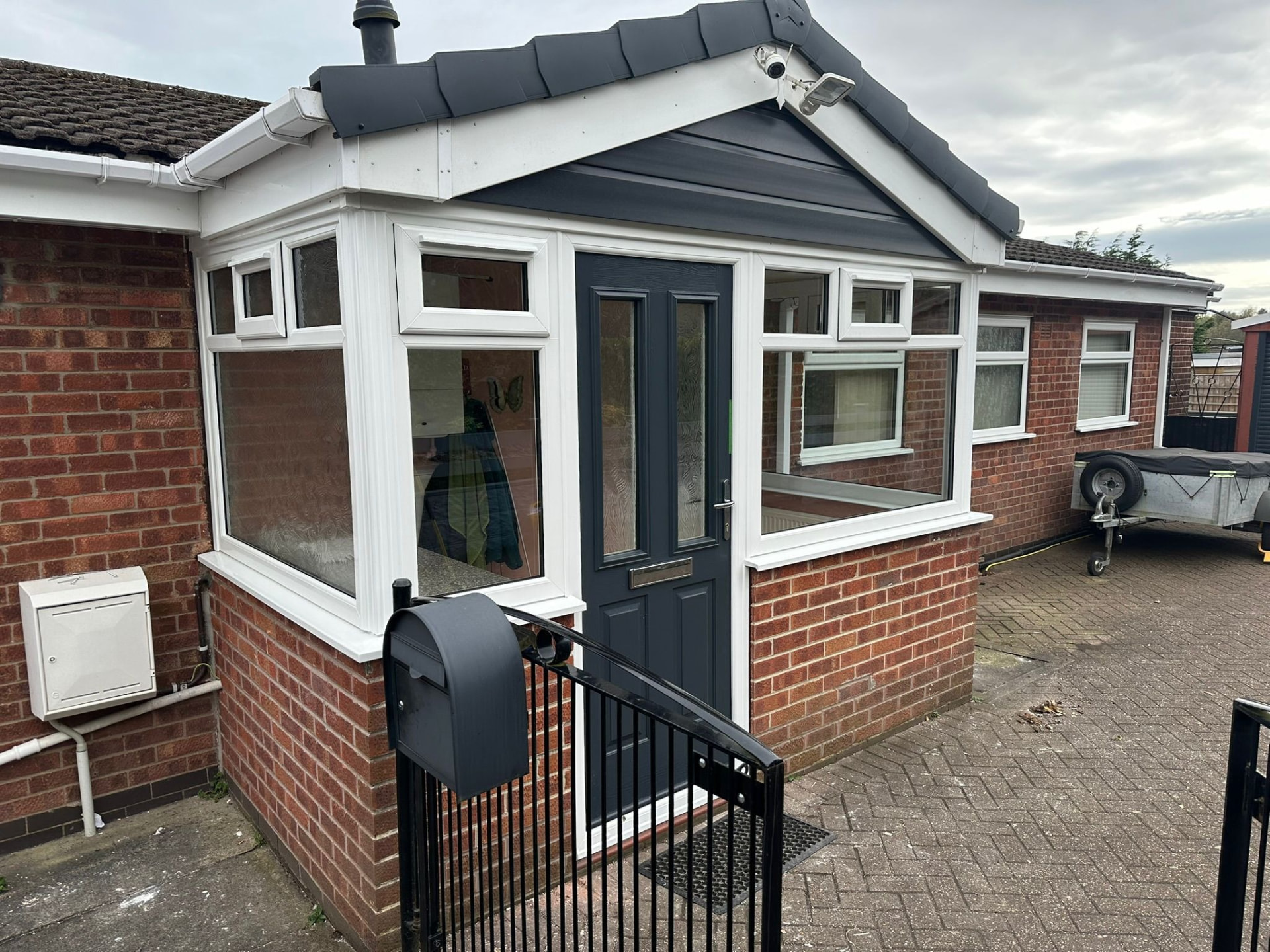
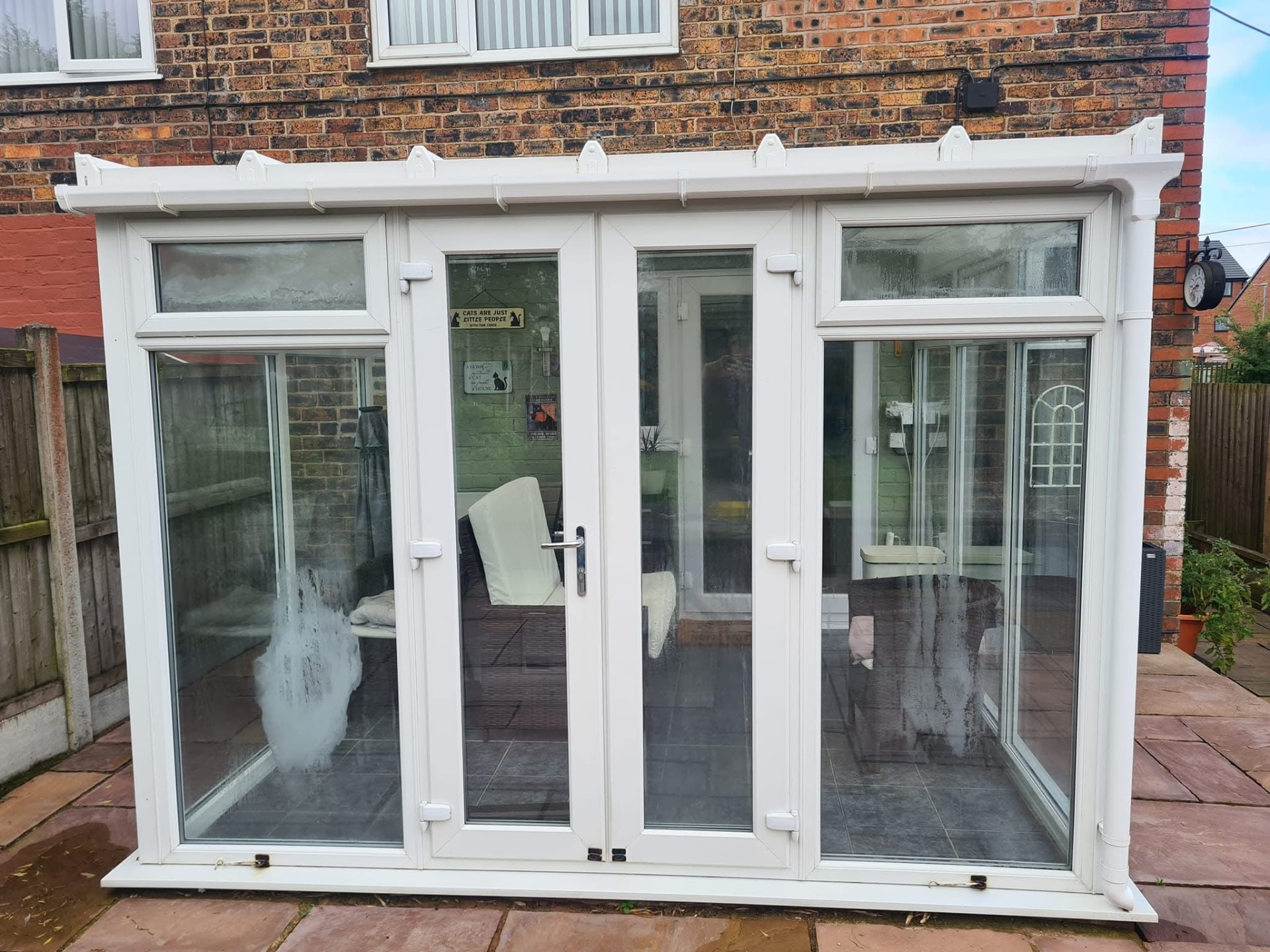
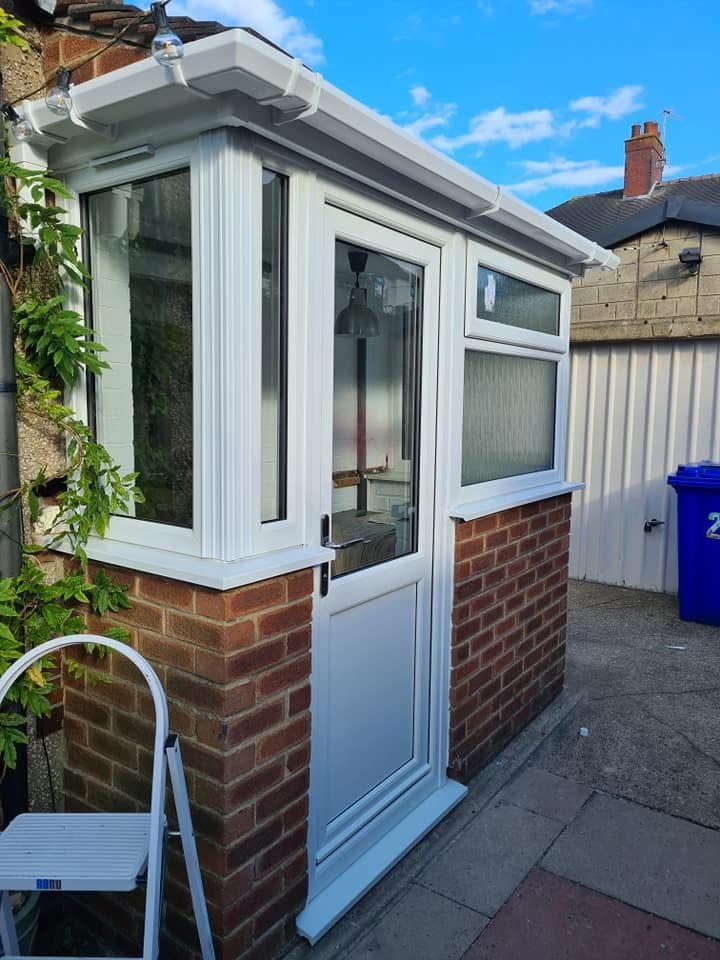
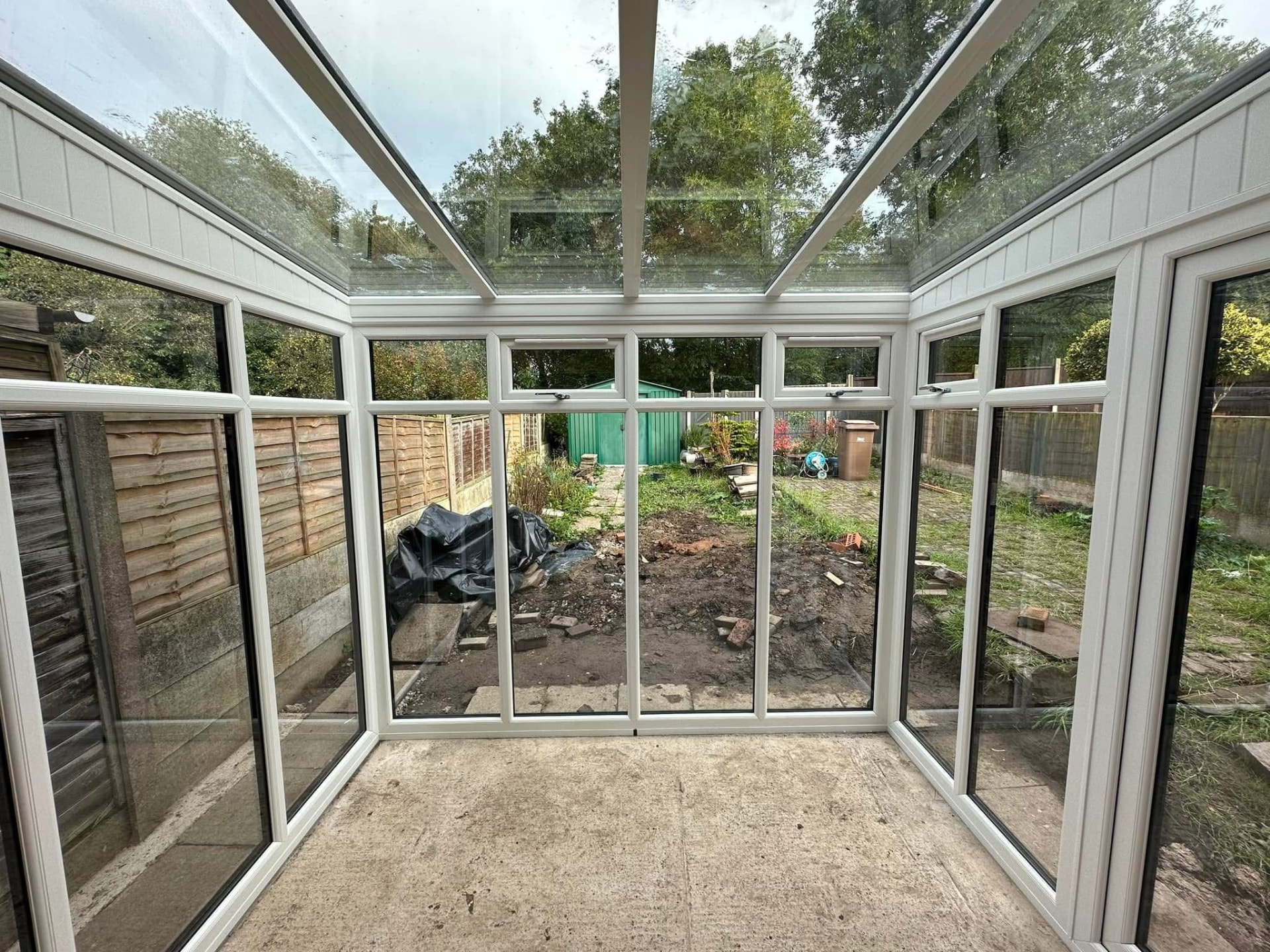
Porch & Conservatory Infills we have completed locally
Common questions
Answers before
you commit
If your question is not here, call Anthony Jones on 01782 479526. A two-minute conversation usually settles it, and there is never any pressure to book.
How much does a porch or conservatory infill cost?+
It depends on the size and number of panels, whether you need insulated panels or glazed units, and the glass specification. We survey the rebates, measure accurately and provide a written price before anything is made.
Can you replace just the panels that have failed?+
Yes. That is exactly what an infill job is: the frame and structure stay, and only the failed panels or units are replaced. Where several units have misted we usually recommend doing them together, as it works out cheaper per unit.
Will an infill make my conservatory usable in winter?+
Better-performing units and insulated low-level panels make a substantial difference to comfort and draughts. How far that goes depends on the roof and the heating in the room, and we will tell you honestly what to expect rather than overpromising.
Can you stop the room overheating in summer?+
Solar-control glass on the sunny elevations reduces heat gain and glare significantly while keeping the room light. We specify it by elevation rather than applying it everywhere.
How long does the work take?+
Most infill jobs are completed within a day once the panels have been made. There is no building work involved and nothing to redecorate afterwards.
Do infill panels need to be safety glass?+
Glazing in and beside doors and at low level is a critical location and must be toughened or laminated. We identify those positions at survey and specify accordingly.
How long do insulated panels last?+
A quality panel of the correct thickness, seated on new gaskets in a sound rebate, should give many years of service without flexing, discolouring or letting water past.
My conservatory leaks at a panel edge: can that be fixed?+
Usually yes. Leaks at panel edges are commonly caused by an incorrectly sized infill, perished gaskets or blocked drainage in the frame. We diagnose the actual path before quoting a fix.
Is the work guaranteed?+
Panels and sealed units carry manufacturer cover, and our full installations are Assure certified and covered by a 10-year insurance backed guarantee. Your quotation sets out exactly which cover applies.
Which areas do you cover?+
Stoke-on-Trent and across Staffordshire and Cheshire, including Newcastle-under-Lyme, Stone, Milton, Birches Head, Alsager, Crewe and Sandbach.
Related services
Glass Replacements
Broken, cracked or misted glass replaced quickly: toughened, obscure and specialist units supplied.
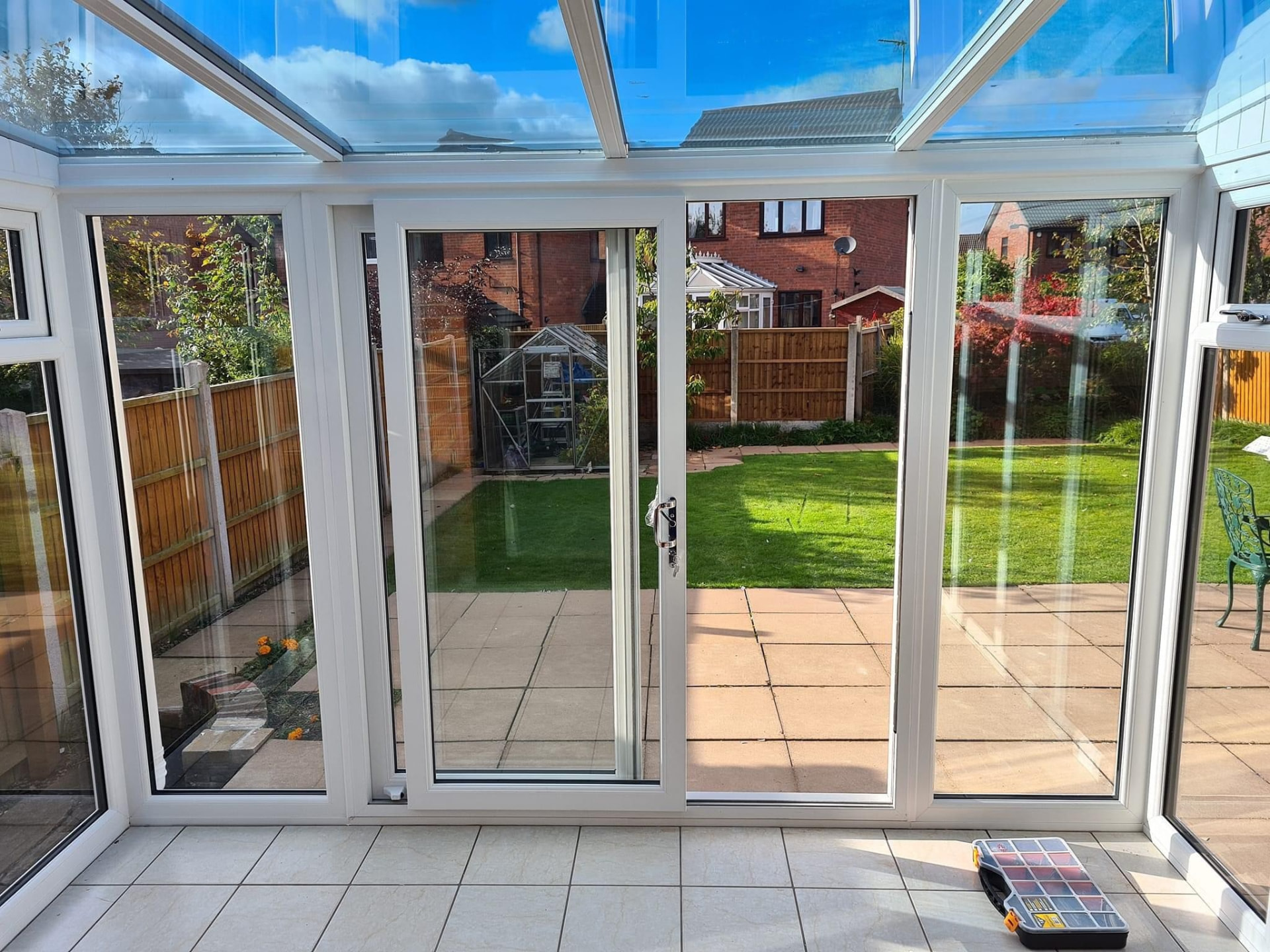
Patio & French Doors
Smooth-running sliding and French door sets that open your home to the garden without losing security.
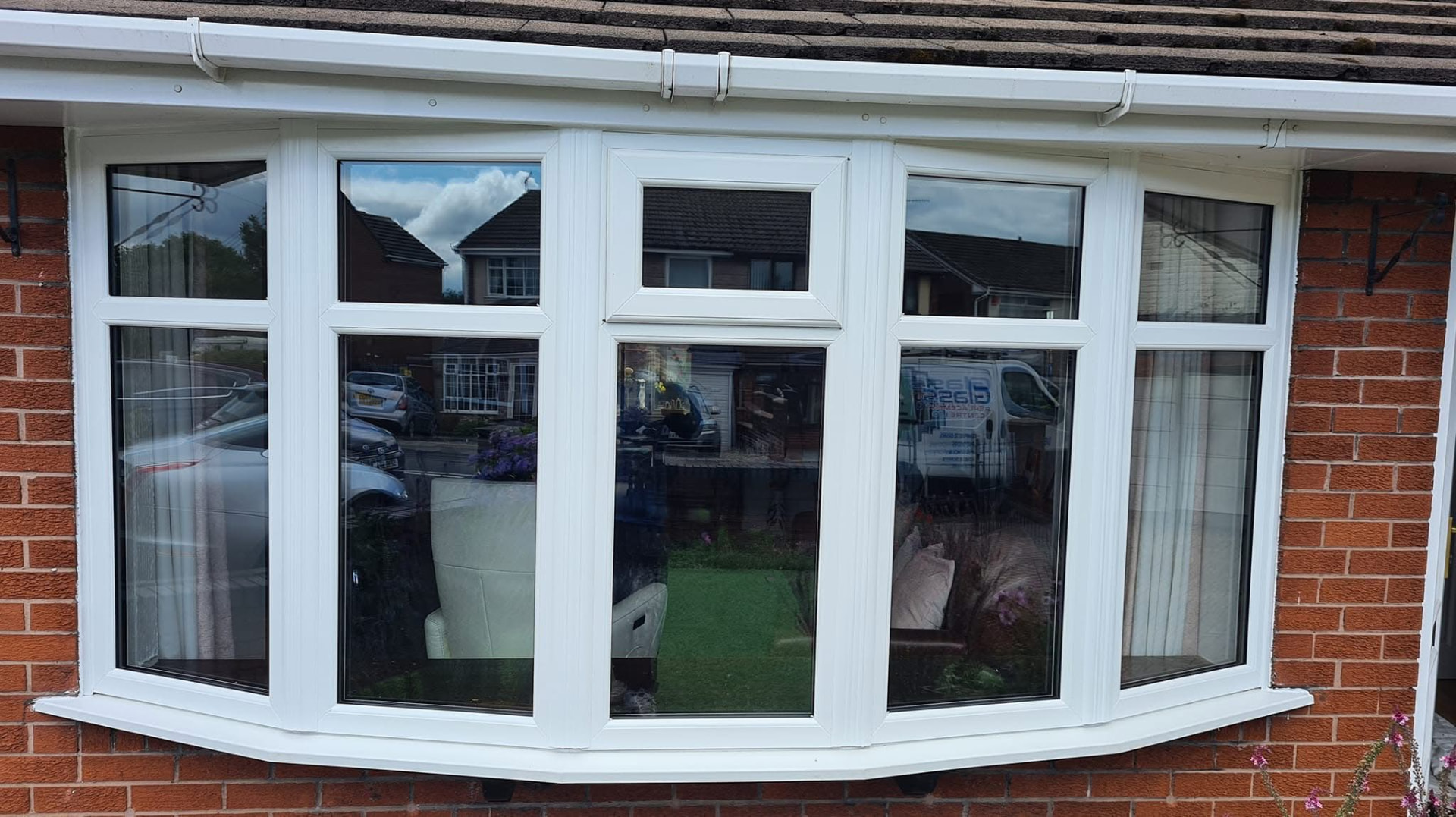
Double Glazing Repairs & Replacements
Misted units, failed seals, faulty hinges, handles and locks put right without replacing the whole frame.
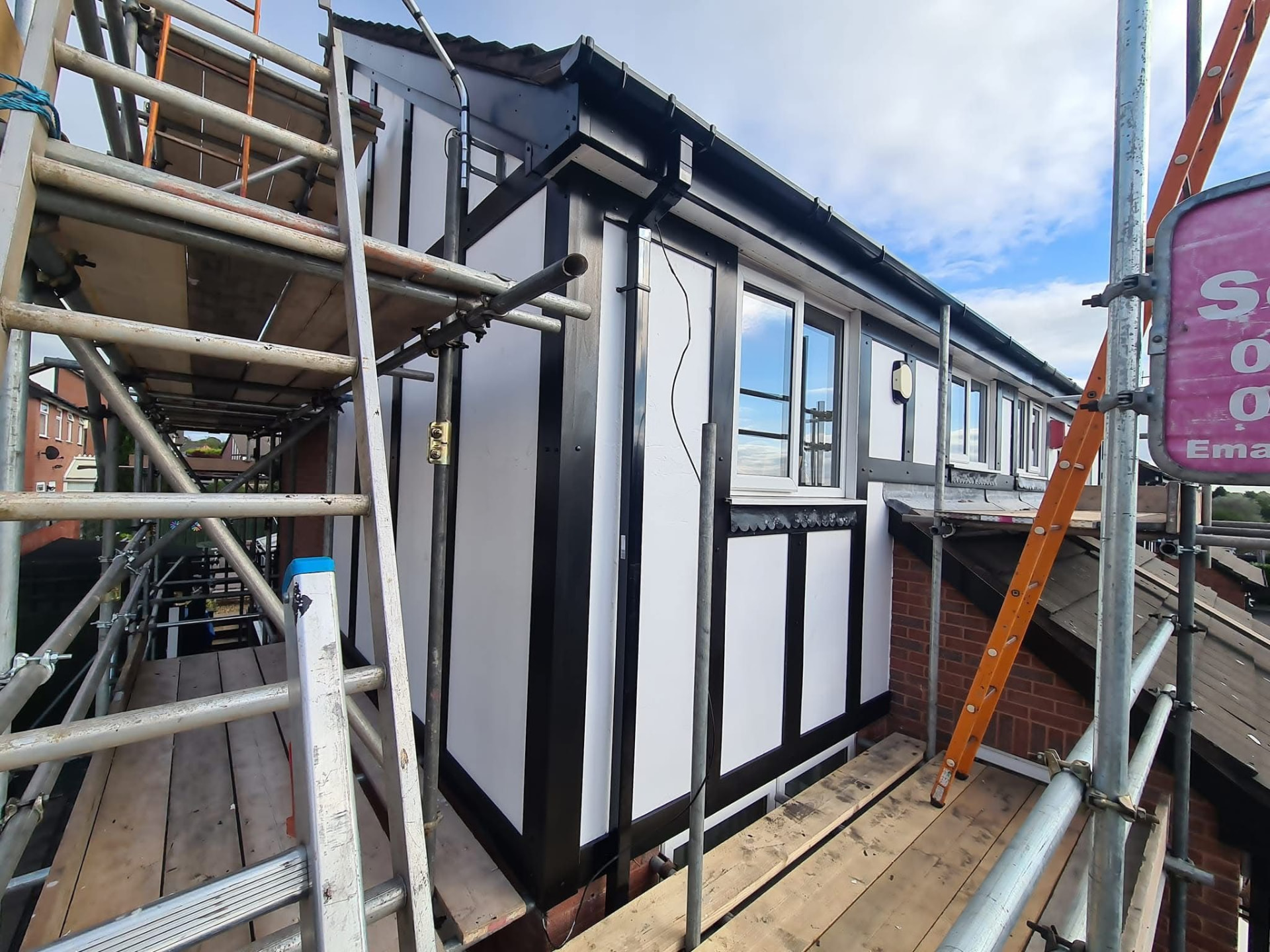
Fascias, Soffits & Guttering
Rotten timber and tired plastics replaced with clean uPVC roofline that protects the building envelope.
Areas we cover
Not sure we reach you? See every area we cover across Staffordshire and Cheshire, browse all window and door services, or contact us and we will tell you straight away.
Next step
Get the room back into use
Send us photos or call and we will survey the frames, specify the right panels and glass for each elevation, and put a written price in front of you.
Assure certified · 10-year insurance backed guarantee · Rated 5.0 from 99 Google reviews