
Roofline · Stoke-on-Trent & Staffordshire
Fascias, Soffits& Guttering AcrossStoke-on-Trent
Stop water running down your walls and into the roof timbers: rotten boards removed, uPVC roofline fitted to a proper fall, and the whole edge of the roof sealed against Staffordshire weather.
Rated 5.0 from 99 Google reviews10-year insurance backed guarantee
Get a Free Quote
Assure certified
Installations independently checked against Building Regulations.
10-year IBG
Every installation covered by an insurance backed guarantee.
5.0 from 99 reviews
Verified Google reviews from customers across Staffordshire.
Family-run since 2019
Company No. 12220717, based in Stoke-on-Trent.
Free written quotation
Surveyed, priced in writing, with no obligation to proceed.


The service
The least visible part of the house does the most protective work
The roofline is the assembly at the edge of the roof: the fascia board carrying the gutter and closing the rafter ends, the soffit closing the underside of the overhang, the bargeboards at the gable, and the gutters and downpipes that take rainwater away from the walls. Together they keep water off the fabric and let the roof space breathe.
Replacing timber roofline with uPVC suits any property where the boards have started to rot, flake or sag, where gutters overflow in heavy rain, or where the paintwork has become a recurring job on a ladder. It is also sensible work to do at the same time as a re-roof or a full window replacement, while access is already sorted.
The signs are usually visible from the pavement: peeling or blistered paint, dark staining down the render or brickwork beneath a gutter joint, sagging gutter runs, plants growing out of the gutter, daylight or bird access at the eaves, and soffit boards that flex when a ladder rests against them.
Professional installation matters because the roofline is a system, not a set of boards. Gutters need a consistent fall to the outlet, fascias need fixing into sound rafter ends rather than into rotten timber, soffits need ventilation to keep the roof space dry, and every joint needs to be supported so thermal movement does not open it. Cladding over rot, a common shortcut, hides the problem while it continues.
Who it is for
Homeowners tired of painting timber boards, landlords protecting the building fabric, and anyone with overflowing gutters or staining down the walls.
When it is needed
Rotting or flaking fascias, sagging gutters, overflowing joints, damp patches at wall heads, bird or wasp access at the eaves, or a roofline never replaced since the house was built.
What is included
Survey, safe access, removal and disposal of old timber and gutters, new uPVC fascias, soffits, bargeboards, gutters and downpipes, ventilation, and a full clear-up.
What happens if it waits
Water at the roof edge finds its way into everything below it
A gutter that overflows is not throwing water onto the garden; it is throwing it against the wall, repeatedly, in every downpour. Saturated brick and render conduct moisture inwards, and on a wall that never dries out you eventually see damp patches on internal plaster, blown paint and, on solid-wall properties, a persistent cold, musty upstairs corner.
Rot at the fascia is worse because it spreads into structure. The fascia is fixed to the rafter feet, so a wet, decaying board keeps the rafter ends wet too. Timber that stays damp softens, fixings lose their grip, and the gutter it carries begins to sag and pull away, which makes the overflow worse and accelerates the whole cycle.
The mistake we are called to correct most often is capping: thin uPVC cladding nailed straight over old timber to make it look tidy. The rot continues underneath, sealed in and kept damp, and the new fixings go into wood that will not hold them. Two or three years later the cladding is bowing and the repair costs more than doing it correctly would have.
Damp walls and internal damage
Overflowing gutters soak walls in every downpour until moisture works through to internal plaster and decoration.
Rot spreading into rafter ends
A wet fascia keeps the rafter feet wet. Softened rafter ends turn a roofline job into a carpentry and roofing job.
Pests in the roof space
Gaps at the eaves let birds, wasps and squirrels into the loft, where they damage insulation, cabling and stored belongings.
Blocked ventilation and condensation
A roofline with no eaves ventilation traps moisture in the loft, which condenses on cold timber and degrades insulation.
Our process
How a roofline replacement runs
Access and sequencing decide how well a roofline job goes. Each stage is completed properly before the next covers it up.
- STEP 1
Inspection
We assess the boards, gutter falls, rafter ends and any staining, and identify whether timber repairs are needed before new roofline goes on.
- STEP 2
Diagnosis & written price
You get a clear written quotation setting out what is being replaced, the colour and profile, and any timber repair identified at survey.
- STEP 3
Strip out
Old gutters and timber are removed rather than covered, rafter ends are exposed and checked, and everything taken off is removed from site.
- STEP 4
Installation
New fascias fixed into sound timber, soffits fitted with ventilation, then gutters hung to a consistent fall with supported joints and downpipes run to the drainage.
- STEP 5
Testing & clear-up
Gutter runs are water-tested for flow and leaks, fixings and joints are checked, and the site is cleared of all debris and offcuts.
What you get
What a replaced roofline protects
Rainwater taken away properly
A consistent fall to the outlet and correctly supported joints means water reaches the downpipe instead of the wall beneath.
Dry walls and dry roof timbers
Fixing into sound timber and closing the eaves keeps moisture out of the rafter feet and off the wall head all year.
No more painting at height
uPVC is washed down, not sanded and repainted, which removes an entire recurring maintenance job that involves a ladder.
A ventilated, healthier loft
Soffit ventilation lets the roof space breathe, reducing condensation on cold timbers and protecting insulation performance.
The eaves closed to pests
Properly detailed soffits and closures stop birds, wasps and rodents getting into the roof space through gaps at the edge.
A frontage that looks finished
Clean, straight lines in a colour matched to your windows and doors lift the whole elevation: the detail people notice from the street.
In detail
Boards, profiles, gutter systems and access
Roofline components are chosen for the roof they sit on. These are the decisions that determine whether the work lasts.
Fascias, soffits and bargeboards
Full replacement fascia board is rigid uPVC fixed directly to sound rafter ends, sized to carry the gutter and close the roof edge. It is the correct specification where the existing timber has decayed, as opposed to cladding, which only makes sense over genuinely sound, dry timber.
Soffits are supplied flat or vented, and the choice depends on how the roof space is ventilated. Bargeboards close the gable ends and take the same profile and colour so the whole edge reads consistently. Finishes cover white, black, anthracite and woodgrain foils, usually matched to the windows.
Guttering systems and sizing
Gutter profile and size are chosen for the roof area draining into them. Half-round is the common domestic default; deeper and squarer profiles carry significantly more flow and are the right answer on large roof slopes, steep pitches or where an existing gutter has always struggled in heavy rain.
Falls, bracket spacing and outlet positions matter as much as the profile. Brackets at the correct centres stop the run sagging between fixings, a consistent fall stops standing water and silt build-up, and expansion allowance at the joints stops summer movement popping the seals.
Downpipes and drainage
Downpipes are run and clipped so they discharge into a gully, a soakaway or the existing surface water drain, not onto a path where the splash-back soaks the wall. Shoes, offsets and swan necks are used to negotiate overhangs and porches cleanly.
Where a property has always had an overflow point, we look at why: an undersized run, a level gutter, a blocked outlet or a roof area draining to a single downpipe. Fixing the cause is cheaper than repainting the wall it has been staining.
Ventilation, access and property types
Eaves ventilation is designed in, using vented soffits or over-fascia vents where the roof construction requires them, so the loft can breathe without letting weather or wildlife in.
Access varies enormously between a bungalow, a three-storey townhouse and a commercial unit, and it is planned at survey rather than improvised on the day. Bungalows in Milton and Birches Head are typically straightforward, while gable-end terraces and rendered semis need more careful setting out at the verge.
Recent work
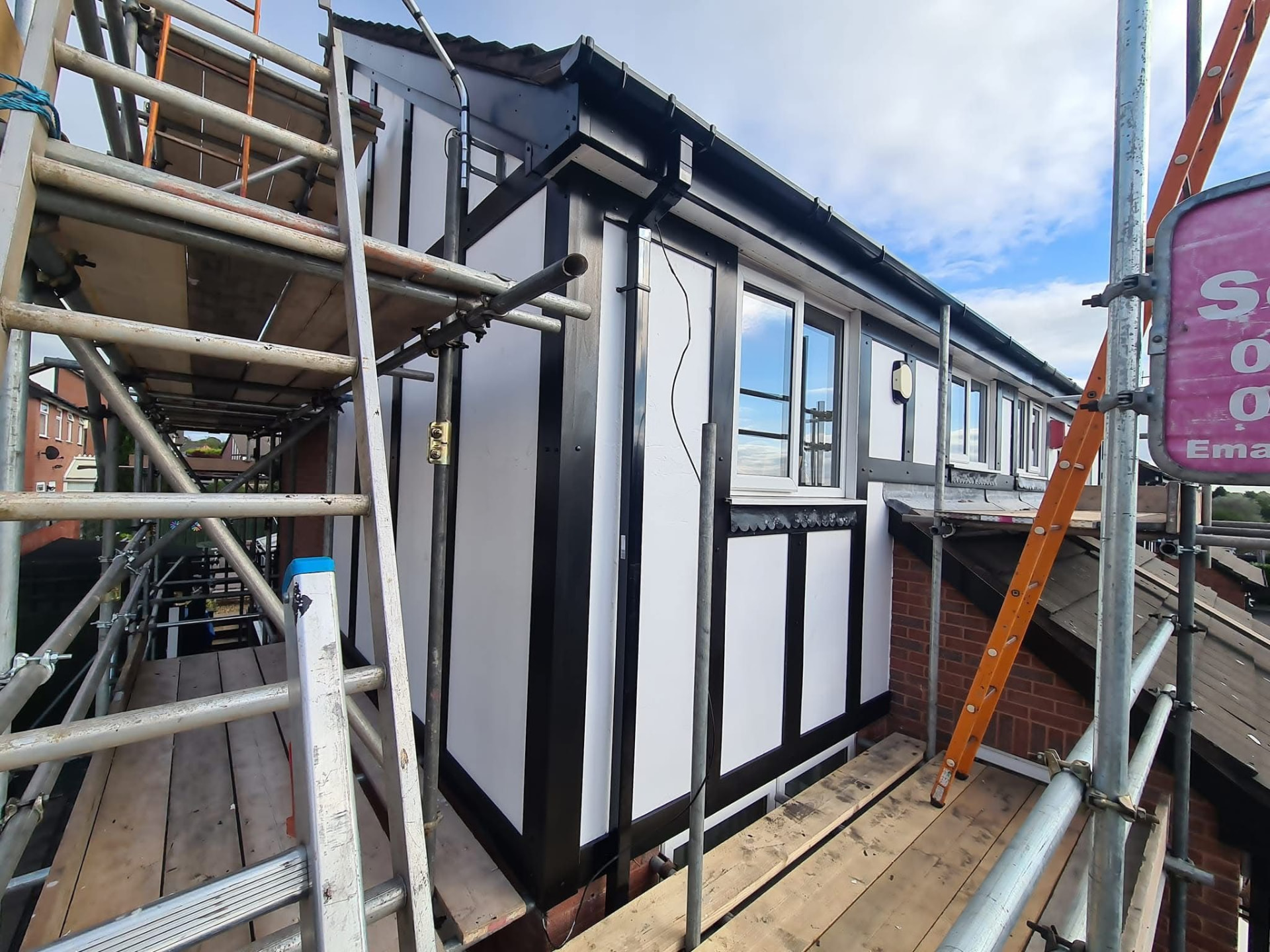
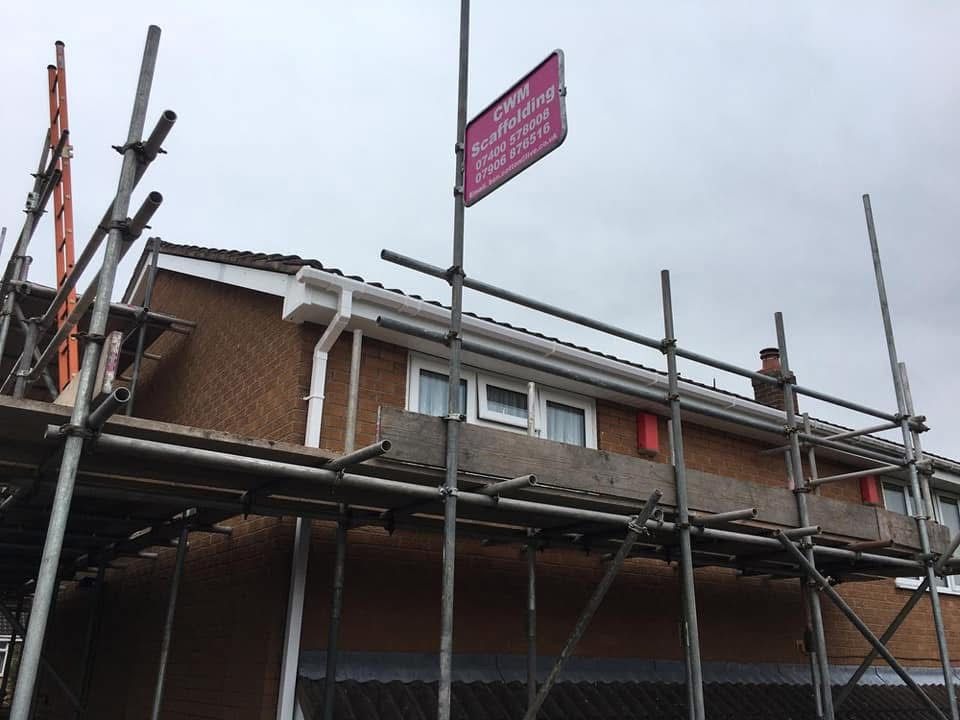
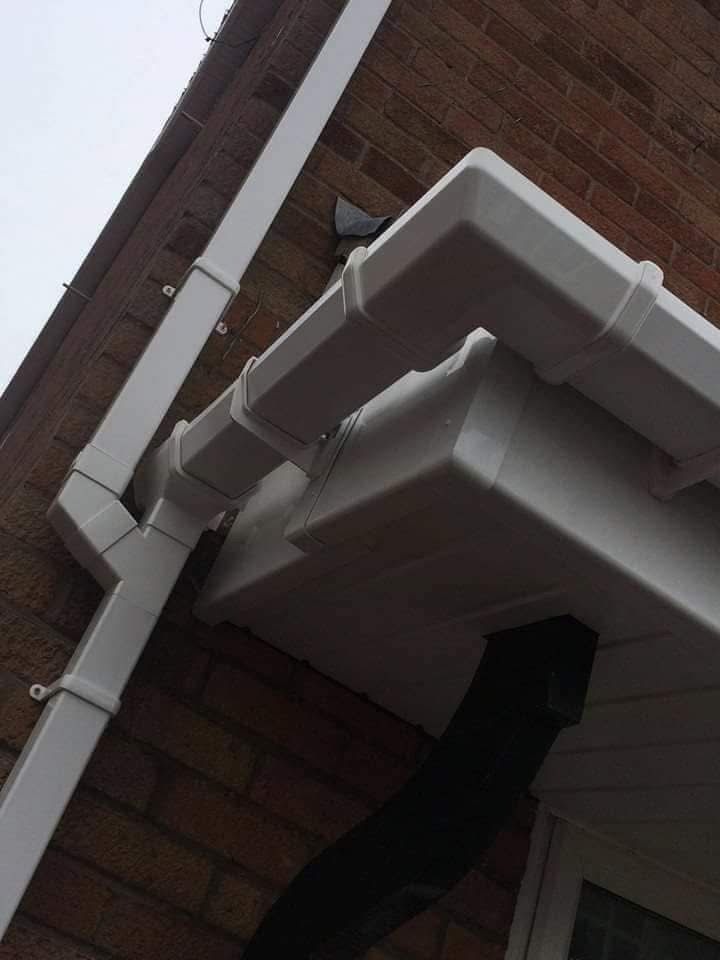
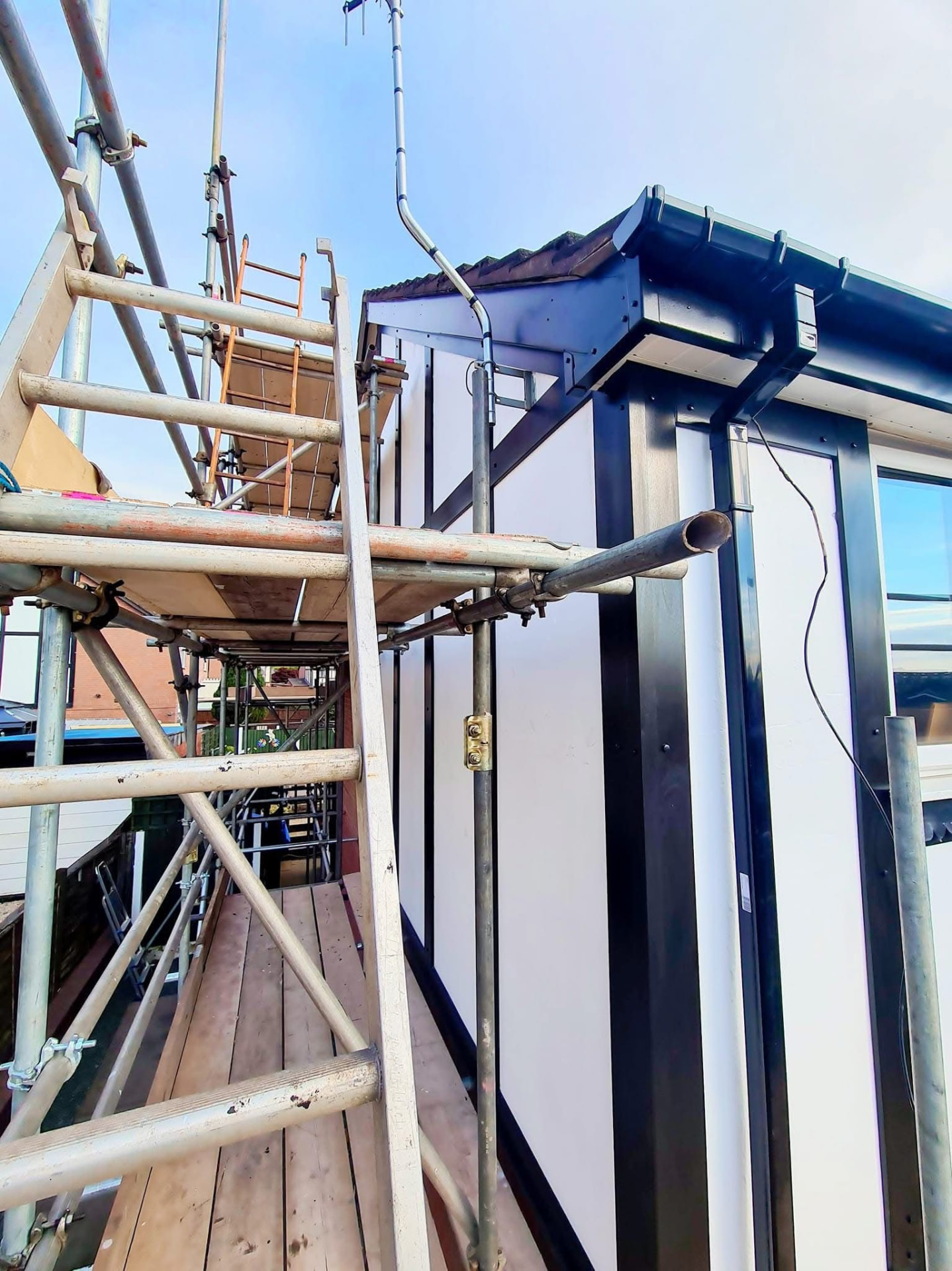
Fascias, Soffits & Guttering we have completed locally
Common questions
Answers before
you commit
If your question is not here, call Anthony Jones on 01782 479526. A two-minute conversation usually settles it, and there is never any pressure to book.
How much does it cost to replace fascias, soffits and guttering?+
It depends on the length of the roofline, the number of elevations, the access required and whether any timber repairs are needed. We survey the property and put a full written price in front of you, including removal and disposal of the old materials.
How long does a roofline replacement take?+
A typical semi-detached house is usually completed in one to two days. Larger properties, difficult access or timber repairs extend that, and the expected duration is confirmed in the quotation.
Can you cap over my existing timber instead of replacing it?+
Only where the timber is genuinely sound and dry. Capping over rot traps moisture and gives new fixings nothing solid to hold, so we will not recommend it as a way of hiding decay.
Do I need scaffolding?+
It depends on the height, the pitch and the access around the property. We assess it at survey and include whatever access is required in the written price so there are no additions later.
How long does uPVC roofline last?+
Quality uPVC boards and gutter systems give many years of service with no repainting. Washing them down occasionally and keeping the gutters clear is the whole maintenance requirement.
Will you match the colour to my windows?+
Yes. White, black, anthracite and woodgrain foil finishes are available, and we will match or complement your existing frames so the elevation looks intentional.
My gutters overflow in heavy rain: is that a blockage?+
Sometimes, but often it is an undersized run, a lost fall or too few outlets for the roof area. We identify the actual cause at survey rather than clearing a gutter that will overflow again in the next downpour.
Can you deal with an urgent leaking gutter?+
Call the office and describe the problem. We will advise on the immediate risk and tell you honestly how quickly we can attend.
Do you remove the old materials?+
Yes. All old timber, gutters and debris are taken away and the site is cleared as part of the job.
Which areas do you cover for roofline work?+
Stoke-on-Trent and across Staffordshire and Cheshire, including Newcastle-under-Lyme, Milton, Birches Head, Stone, Alsager, Crewe and Sandbach.
Related services
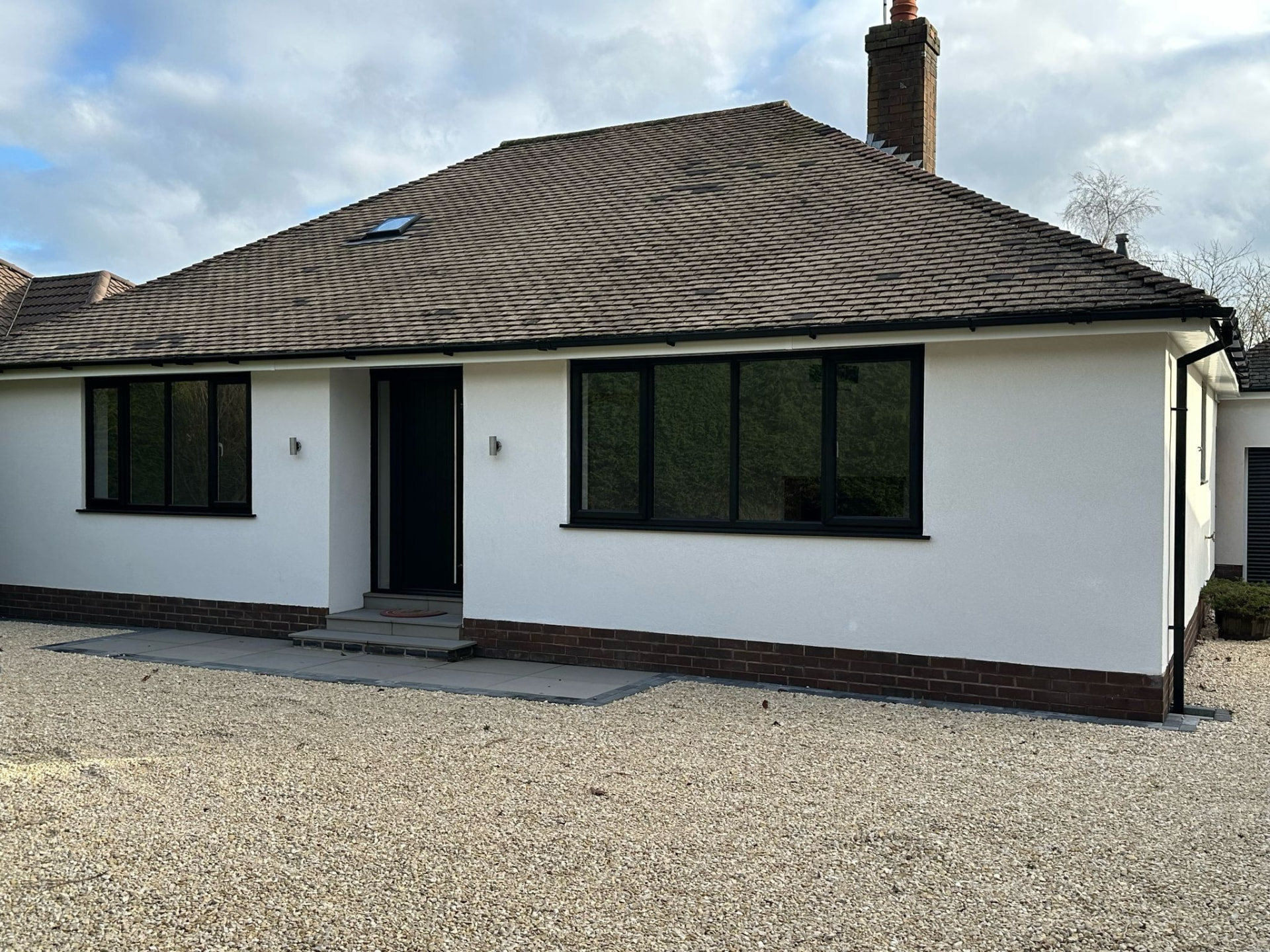
Window Installations & Replacement
Precision-measured replacement windows fitted to airtight tolerances, from single units to whole-house projects.
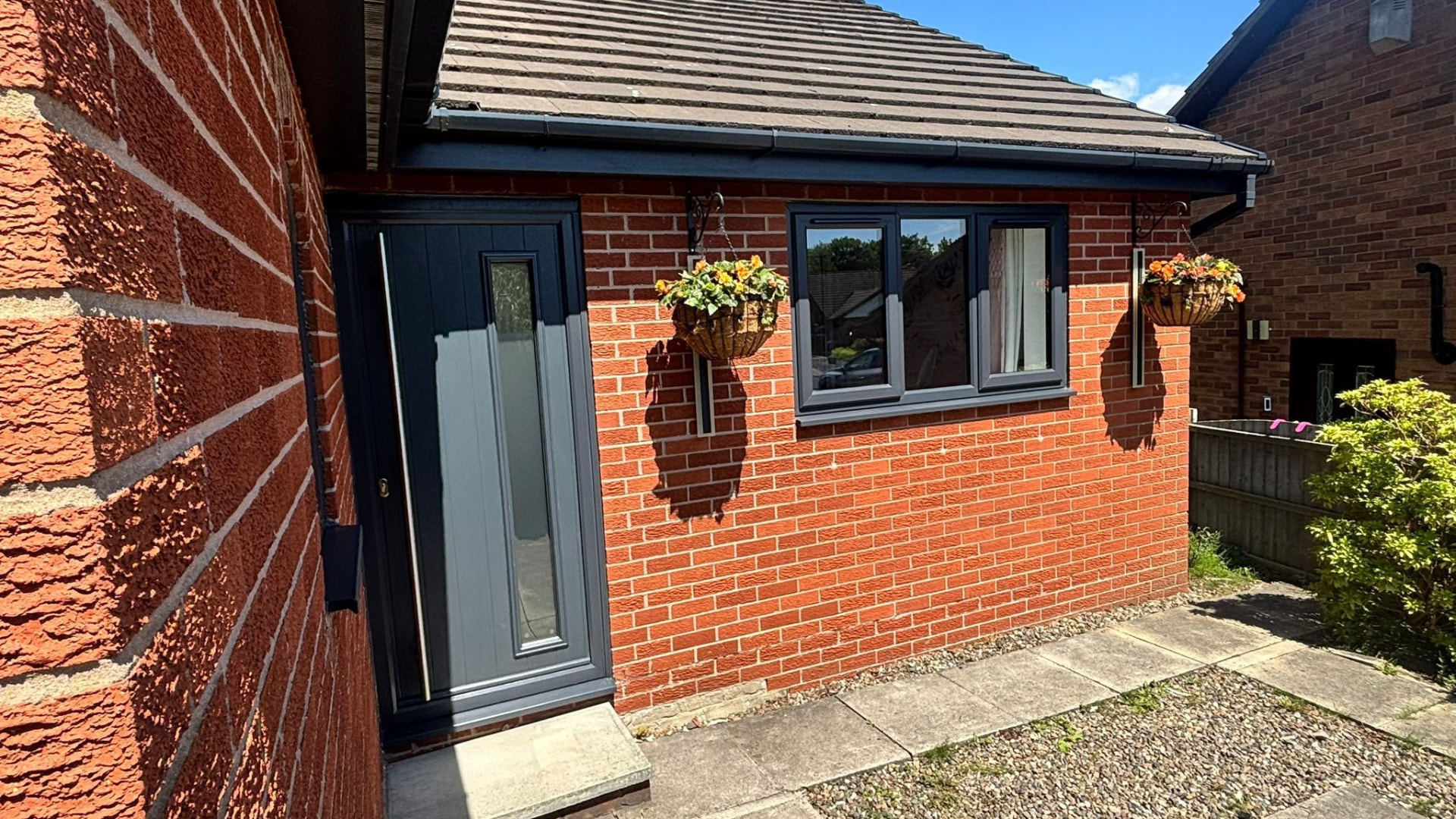
uPVC Windows & Doors Installations
Low-maintenance uPVC frames in a wide range of finishes, installed to keep heat in and draughts out.
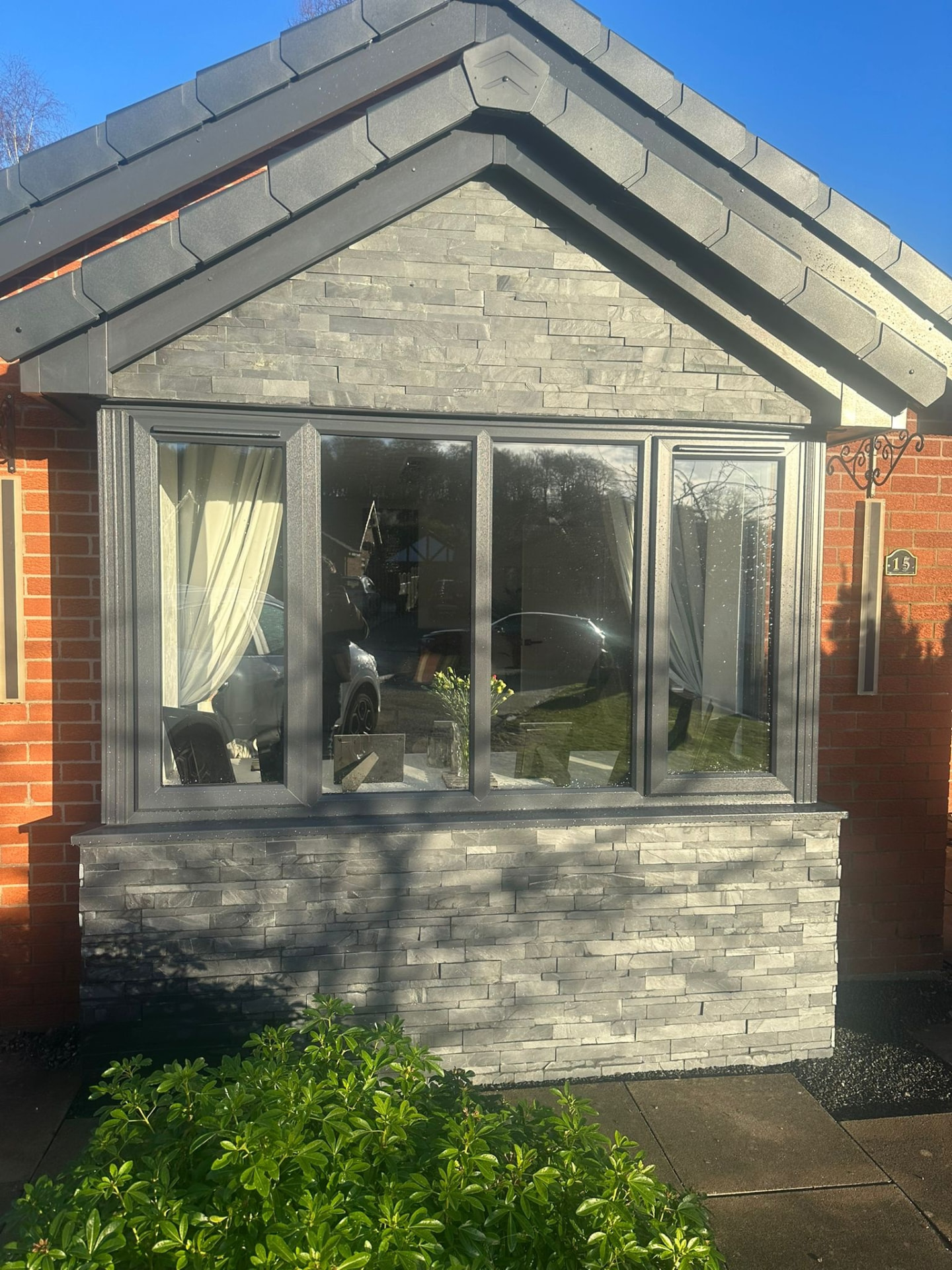
Porch & Conservatory Infills
Panel and glazing infills that turn cold, dated porches and conservatories into usable, comfortable space.
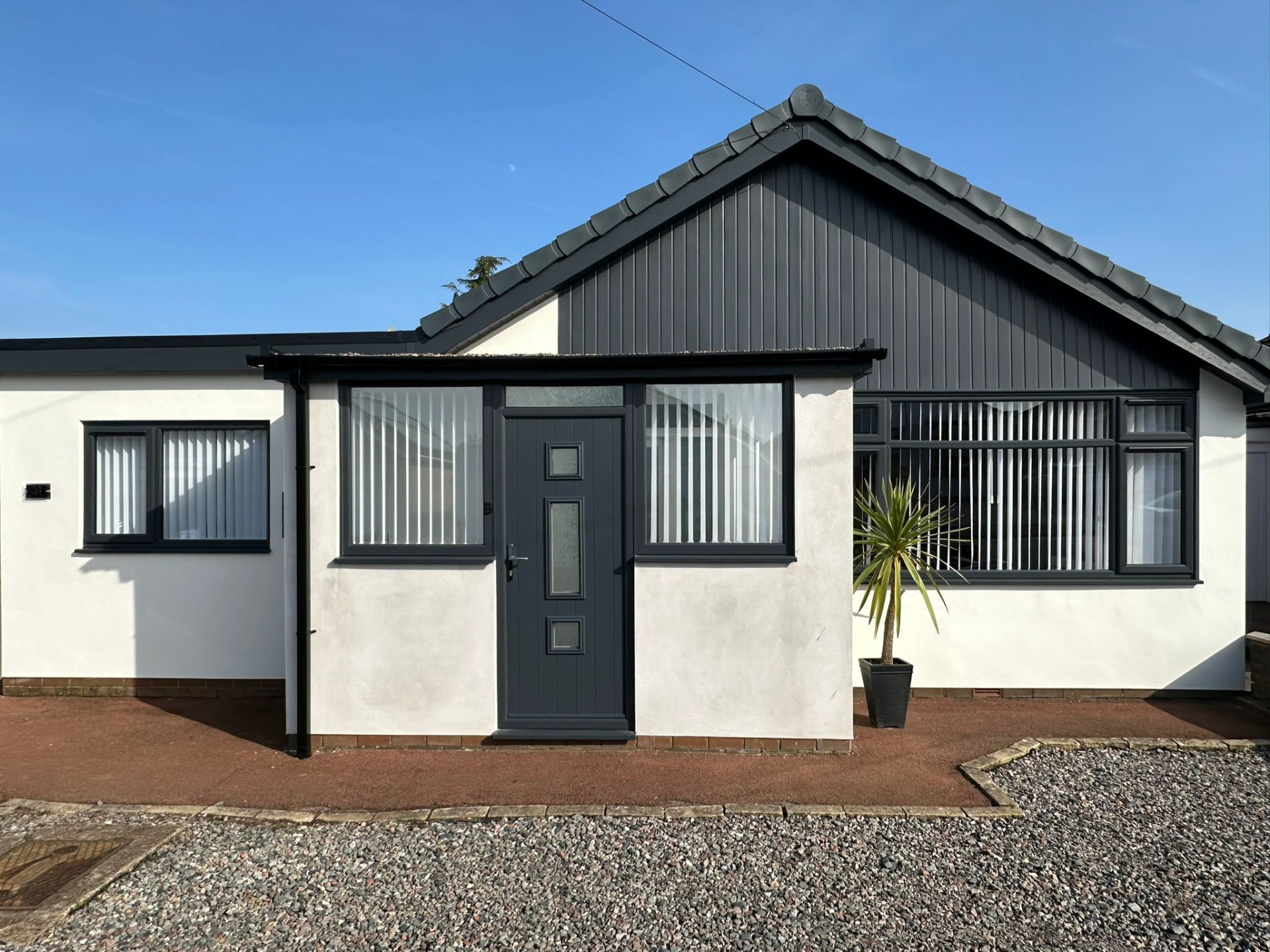
Glass Replacements
Broken, cracked or misted glass replaced quickly: toughened, obscure and specialist units supplied.
Areas we cover
Not sure we reach you? See every area we cover across Staffordshire and Cheshire, browse all window and door services, or contact us and we will tell you straight away.
Next step
Protect the fabric before the next wet winter
Book a free survey and we will check the boards, the falls and the rafter ends, then give you one written price covering access, replacement and disposal.
Assure certified · 10-year insurance backed guarantee · Rated 5.0 from 99 Google reviews